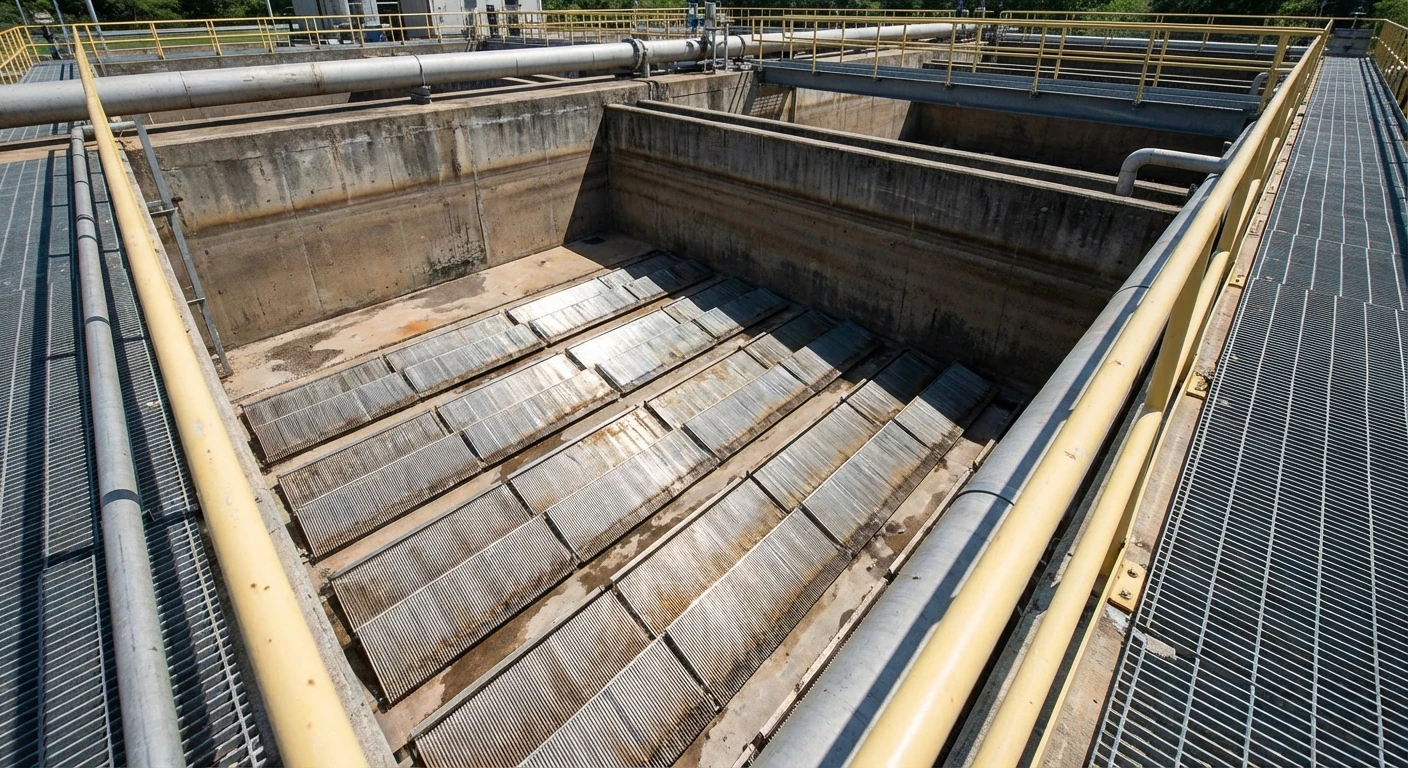
Where Our Screens Work
Municipal Water Intake
Self-cleaning Coanda screens and low-velocity T-screen intake, compliant with Clean Water Act 316(b) and EU Water Framework Directive.
Industrial Wastewater
Self-cleaning Coanda screens, sieve bend screens, plus cylindrical and rotary drum screens for industrial effluent treatment.
Hydroelectric Intake
Coanda screens with no moving parts, developed in partnership with ADENCO.
Drinking Water Treatment
Self-cleaning Coanda screens with flat and cylindrical screens for pre-screening and filter underdrains.
Desalination Pre-treatment
Super Duplex intake screens for seawater feed.
Agricultural Water
Self-cleaning Coanda screens, sieve bend screens, and passive intake screens requiring no power for irrigation systems.
Dewatering
Sieve bend screens for sludge dewatering at wastewater treatment plants.
Underdrain Laterals
Wedge wire screen laterals for filter media support and even backwash distribution in gravity and pressure sand filters.
Ion Exchange Laterals
Cylindrical screen laterals retain resin beads in ion exchange vessels while allowing even fluid distribution and collection.
Resin Traps
In-line wedge wire strainers capture migrated resin and protect downstream pumps, valves, and instruments.
Screens for Water and Wastewater Treatment
Materials for Water and Wastewater Treatment
Regulatory Compliance
How Screens Fail — and How We Prevent It
Blinding from fibrous debris
V-wire profile sheds rags, leaves, and biofilm during backwash or natural flow reversal. Slot geometry resists wrap-around fouling that plagues bar racks.
Biofouling and zebra mussel growth
Higher-grade alloys and optional surface treatments slow biological attachment. Through-slot velocity tuning reduces deposition.
Corrosion in chlorinated systems
SS 316L baseline for chlorinated municipal water; Duplex 2205 for brackish and aggressive chlorides; Super Duplex for seawater contact.
Hydraulic surge and impingement
Reinforced support bar spacing and continuous-weld construction tolerate flow surges and pressure cycling without slot deformation.
What to Send for an Accurate Quote
The more of these you can share when you request a quote, the faster we respond with a defensible specification.
Specify Your Water and Wastewater Treatment Screen
Send your application parameters. We respond within one business day.
REQUEST A QUOTE