Where Our Screens Work
Run-of-River Hydroelectric Intake
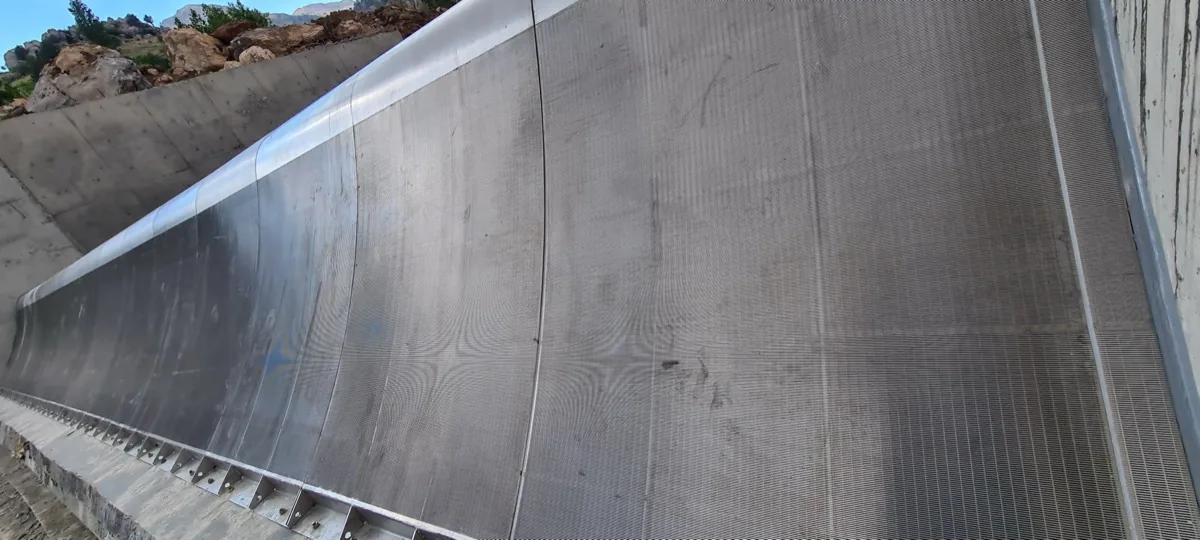
Coanda screens for small hydro and run-of-river plants, fish-safe and maintenance-free.
Cooling Water Intake
Cylindrical T-screens at low approach velocity for thermal and combined-cycle power plants.
Penstock and Turbine Protection
Pre-screening to remove debris before turbine inlets, protecting blades and seals.
Condenser Water Pre-treatment
Flat and cylindrical screens to remove particulates upstream of condenser tube banks.
Fish Protection at Intakes
Compliance with US Clean Water Act 316(b) at ≤ 0.15 m/s (0.5 fps) approach velocity.
Remote and Off-Grid Hydro
Passive Coanda intake screens for installations without power or operator presence.
Small Hydro Standardized Coanda Sizes
Two to three standardized hydraulic sizes with shortened delivery for sub-5 MW run-of-river installations — the most under-served segment in the global Coanda market.
Screens for Hydropower and Power Generation
Materials for Hydropower and Power Generation
Regulatory Compliance
How Screens Fail — and How We Prevent It
Debris bypass during high-flow events
Coanda screens with concave geometry and acceleration plate maintain sweep velocity during freshet and storm flows, shedding leaves and bedload across the screen face.
Ice formation and frazil
Standardized Coanda installations include heated bypass sections and angled deflectors for cold-climate sites. Wedge wire shedding action resists ice anchor points.
Fish impingement and entrainment
Slot opening and through-slot velocity selected to meet NOAA/NMFS and 316(b) limits. V-wire face provides a smooth contact surface that minimizes scale loss in juvenile fish.
Cavitation and abrasive wear
Continuous-weld wedge wire and reinforced support bars tolerate high sweep velocities (2–3 m/s) without slot deformation over years of run-of-river service.
What to Send for an Accurate Quote
The more of these you can share when you request a quote, the faster we respond with a defensible specification.
Specify Your Hydropower and Power Generation Screen
Send your application parameters. We respond within one business day.
REQUEST A QUOTE