Where Our Screens Work
Intake Water Screening
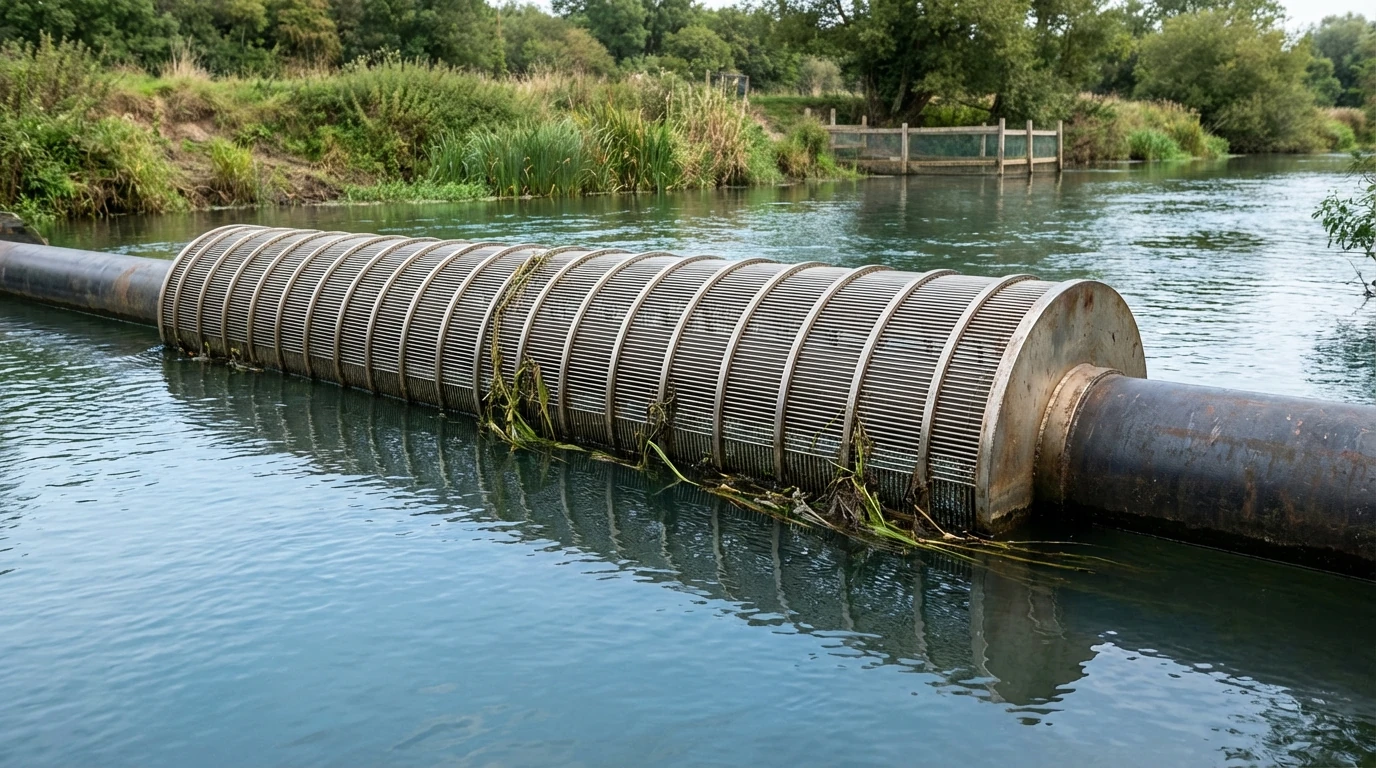
Passive intake screens prevent debris, algae, and wild fish from entering aquaculture water supply systems. Low through-slot velocity meets environmental regulations for aquatic life protection.
Recirculating Aquaculture Systems (RAS)
RAS drum filters and cylindrical filters provide continuous mechanical filtration in recirculation loops. Automatic backwash maintains filtration capacity without interrupting fish production.
Effluent Treatment
Sieve bend and rotary screens remove suspended solids from discharge water before release. Meeting environmental discharge limits requires consistent filtration below permitted TSS levels.
Fish Egg and Fry Protection
Fine-slot screens in hatchery systems protect fish eggs and fry from mechanical damage while maintaining water circulation. Slot sizing is matched to species-specific requirements.
Waste Collection and Solids Removal
Flat panel and cylindrical screens collect feed waste and fecal solids from tank bottoms and raceways. Self-cleaning V-wire design reduces manual maintenance.
Materials for Aquaculture
Regulatory Compliance
How Screens Fail — and How We Prevent It
Biofouling (algae, mussels, barnacles)
Higher-grade alloys and optional surface treatments slow biological attachment. Continuous-slot V-wire profile is cleanable in place.
Salt and seawater corrosion
SS 316L for brackish service; Super Duplex for full seawater immersion and open-ocean cage installations.
Fish impingement on intakes
Slot opening and through-slot velocity selected per species and life-stage; complies with 316(b), EU Water Framework Directive, and NOAA/NMFS guidance.
Sediment and feed waste buildup
RAS drum filter and self-cleaning V-wire geometry sustain flow under continuous solids loading. Backwash interval matched to feeding cycle.
What to Send for an Accurate Quote
The more of these you can share when you request a quote, the faster we respond with a defensible specification.
Specify Your Aquaculture Screen
Send your application parameters. We respond within one business day.
REQUEST A QUOTE